


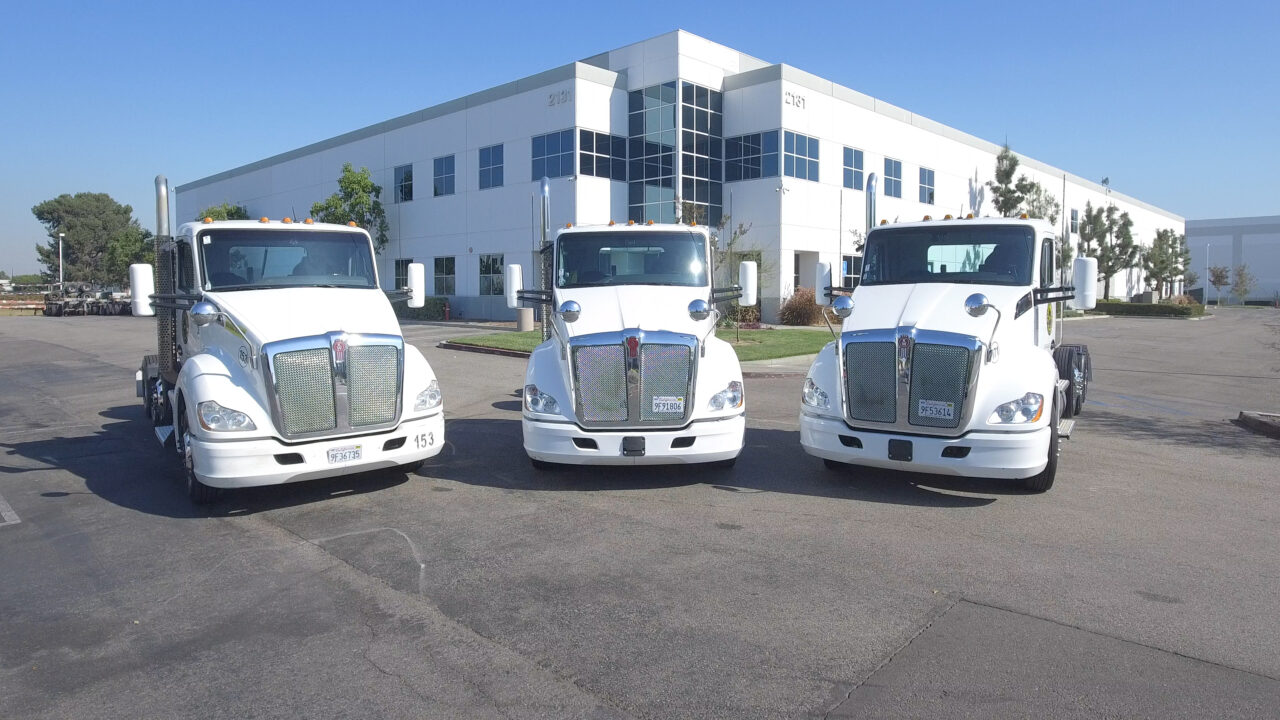
Today’s shipper faces many challenging uncertainties in their day-to-day operations. And one of the most frequently asked questions for total landed cost assurance is, “Why are some drayage carriers more consistent with cost and transit time?”
The answer is a modern drayage fleet. According to the U.S. Environmental Protection Agency, carriers that modernize their drayage fleets by lowering average truck age and reducing idle time improve both air quality and operating costs.
Here are the five ways a modern drayage fleet can help your total landed cost through better fuel efficiency, higher reliability/uptime, and compliance that avoids penalties and delays.
1. Energy Efficient Operation
Asset-based intermodal drayage carriers who invest in aerodynamic tractors that cut air resistance need less power — and as a result, less fuel. For example, the North American Council for Freight Efficiency and Carbon War Room (NACFE) reports that the per-vehicle fuel economy benefit of trailer aerodynamic devices can be over 10%, depending on the devices used. Most fleets are choosing a combination of technologies to reduce aerodynamic drag in more key areas of the trailer: the gap, the underbody, and the rear.
In addition, Shell notes that optimizing tractor aerodynamics can yield large gains and that classic sleepers use up to 30% more fuel than modern, optimized tractors. The energy supplier states that chassis fairings can offer 2-4% improvements in fuel economy and trailers with skirts offer an additional 1-5% fuel saving compared to those without, with additional incremental gains from other aero add-ons.
Knowing your drayage carrier is energy-efficient with each box shipped helps you predict your expenses and avoid sudden fuel-related surprises in the total landed cost.
2. Newer Equipment for Trusted Reliability, Environmental Peace of Mind
A newer fleet with integrated engine/transmission controls, tire-pressure monitoring, and idle-management systems helps keep components within optimal ranges, reducing wear and unplanned breakdowns.
Case in point: The U.S. Department of Energy states gas mileage improves by 0.6% — and up to 3% in some cases — by keeping tires inflated to the proper pressure.
But higher uptime and fewer schedule shocks aren’t the only benefits of an up-to-date fleet. According to the U.S. EPA’s Phase 3 greenhouse-gas standards for heavy-duty trucks, manufacturers must deliver substantially lower CO₂ emissions and fuel consumption from new tractors starting in model year 2027, on top of the 15–27% efficiency gains already required under earlier rules. And fleet studies show that the investment pays off for both shippers and carriers, with modern efficiency packages often paying for themselves in about two years through fuel savings alone.
3. Smarter Powertrains = Predictable, Cost-Efficient Performance
Advanced engine controls and optimized powertrain pairings, like those used in highly efficient spec trucks, such as the Kenworth T680 Advantage, improve fuel economy and performance across different drives and routes.
In fact, Kenworth reports its T680 Advantage gained “up to 10% in fuel efficiency” compared with a standard 2013 T680, equating to more than $4,600 in fuel savings per truck per year in a typical long-haul duty cycle.
Modern aerodynamic tractors like the T680 show that even a mid-single-digit MPG gain compounds into thousands of dollars per truck annually, allowing carriers to offer more competitive and stable drayage pricing. Proof that when your carrier knows what their trucks will cost to run on a lane, they can quote tighter, more reliable drayage rates.
“We operate Kenworth T680 trucks across our fleet. Our vehicles run diesel and alternative fuel systems, and we utilize diesel exhaust fluid (DEF) solutions to improve efficiency and reduce our costs.”
— John Chicas, Intermodal Operations Manager, Heavy Weight Transport
4. Critical Compliance
It’s a fact: Compliant, up-to-date trucks are required for port access, and non-compliant trucks face fines, blocked registrations, and operating restrictions — including penalties, gates, and delays.
At ports like Los Angeles, only trucks registered and compliant under the Clean Truck Program can enter marine terminals, while non-compliant vehicles are effectively turned away at the gate; in California’s statewide Clean Truck Check program, non-compliant trucks can face fines of up to $10,000 per vehicle per day and even registration blocks, which can sideline equipment and delay freight.
A carrier with modern, cleaner trucks is better positioned to comply with port clean-truck rules and low-emission zones, helping avoid non-compliance fees, restricted access windows, and last-minute carrier swaps. Fewer compliance issues mean fewer terminal holds, reschedules, and unexpected charges — all direct hits to total landed cost.
What is diesel exhaust fluid (DEF) and why should shippers care?
DEF is the simple fluid that lets modern diesel trucks run cleaner and more efficiently; managing it correctly keeps trucks compliant, out of ‘limp mode,’ and on schedule — directly impacting your risk of delays and excess costs.
5. Better Data for Proactive Planning, Fewer “Where’s my box?” Alarms
Newer trucks typically integrate more seamlessly with telematics and fleet management systems, which use real-time data to monitor fuel use, idling, and routing.
That same data stream gives dispatch and customers more accurate ETAs and exception alerts, reducing uncertainty and the need for expensive safety stock or expediting.
To capitalize on a newer fleet’s technology, it’s important to look for carriers whose trucks are fully equipped with:
- Global Position Satellite (GPS)
- Electronic Log Data (ELD)
- Camera Surveillance
- Technology enhancements for driver route optimization
A modern drayage fleet provides clarity around the pressing issues shippers face. A carrier that operates a modern fleet is a committed partner who helps you cut total landed cost by burning less fuel, staying on the road more consistently, and avoiding compliance troubles — and ensures a solid solution for drayage challenges.